How AI Video Generation Is Transforming Digital Marketing
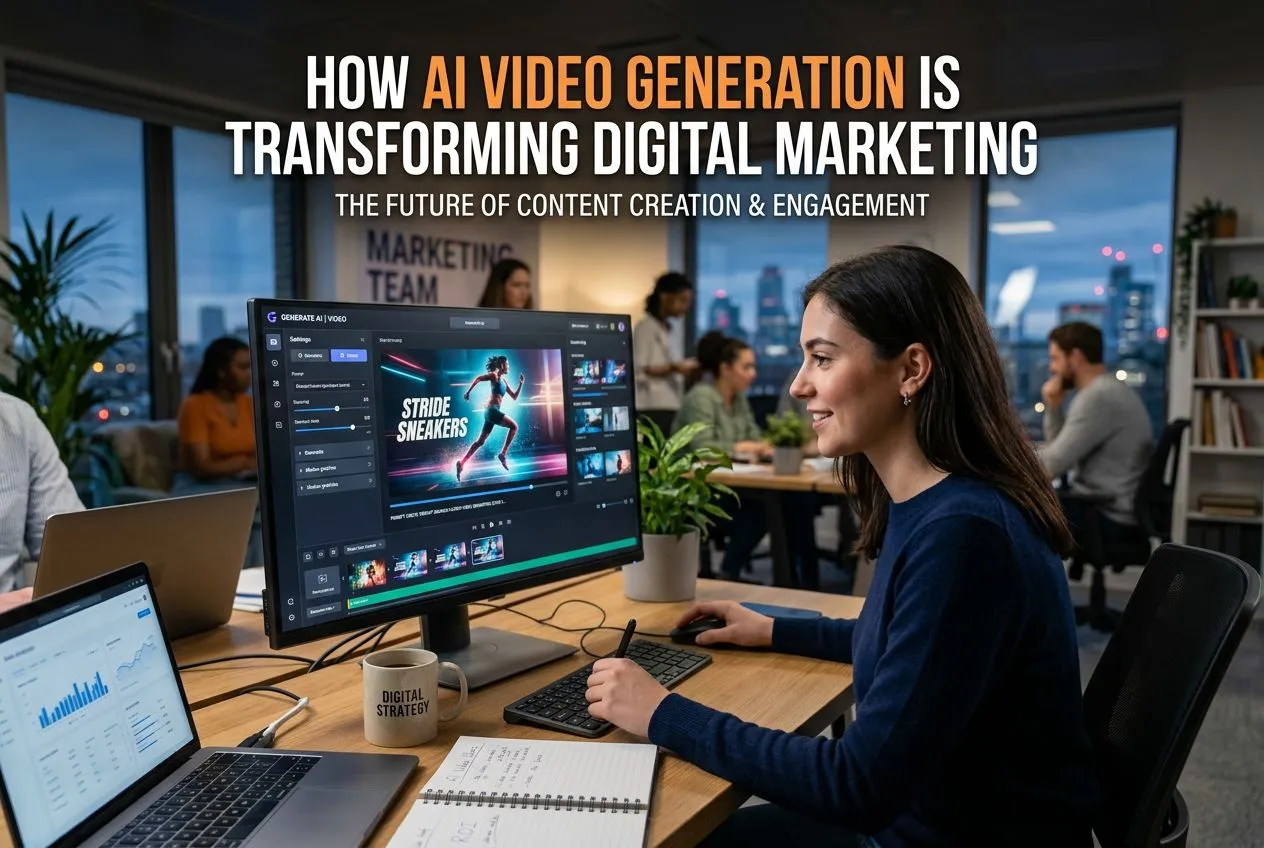
In the fast-paced world of digital marketing, staying ahead of the curve is not just an advantage — it is a necessity. As we move further into 2026, one of the most significant transformations reshaping the industry is being driven by artificial intelligence, particularly in the realm of video content creation. AI video generation is no longer a futuristic concept confined to research labs; it is a practical, accessible tool that is fundamentally changing how brands connect with their audiences. From personalized advertisements to scalable content pipelines, AI is democratizing video production and enabling marketers to achieve results that were once reserved for those with large budgets and dedicated production teams.
The Rise of AI-Powered Video in Marketing
Video has long been the dominant format in digital marketing, consistently delivering higher engagement rates, better brand recall, and stronger conversion performance compared to text or static images. However, traditional video production has always come with significant barriers: high costs, lengthy timelines, the need for specialized skills, and the logistical complexity of coordinating writers, directors, editors, and voice-over artists. For small and mid-sized businesses, these barriers have historically made professional video content an unattainable luxury.AI video generation is dismantling those barriers. Platforms like SharkFoto are at the forefront of this revolution, offering a comprehensive suite of AI-powered tools that automate and enhance every stage of the video creation process. With capabilities ranging from text-to-video and image-to-video generation to video watermark removal and AI-composed music, these platforms empower marketers to produce compelling, high-quality video content in a fraction of the time and at a fraction of the cost. The democratization of video production is now fully underway, and the implications for digital marketing are profound.
Key Ways AI Is Reshaping Video Marketing
Hyper-Personalization at Scale
Perhaps the most transformative impact of AI on video marketing is the ability to create hyper-personalized content at scale. By leveraging customer data, behavioral signals, and demographic information, AI algorithms can generate thousands of unique video variations, each tailored to the preferences and context of individual viewers. This level of personalization was previously unimaginable without enormous resources, but today's AI tools make it not only possible but efficient.Personalized video content resonates more deeply with audiences because it speaks directly to their needs and interests. Studies consistently show that personalized marketing messages drive higher click-through rates, longer viewing times, and improved conversion rates. For brands competing in crowded digital spaces, the ability to deliver the right message to the right person at the right moment is a decisive competitive advantage.
Unprecedented Speed and Agility
The speed at which AI can generate video content is a game-changer for marketing teams. What once required weeks of pre-production, shooting, and post-production can now be accomplished in minutes. A marketer can type a descriptive prompt, select a visual style, and receive a polished video clip ready for distribution — all within a single workflow session.This agility has profound implications for campaign management. Teams can respond in near real-time to emerging trends, launch timely seasonal campaigns, and rapidly iterate on creative concepts. A/B testing, which previously required significant investment to produce multiple video variants, becomes a routine and low-cost activity. The ability to test, learn, and optimize at speed gives AI-enabled marketing teams a structural advantage over those still relying on traditional production methods.
Expanding Creative Possibilities
A common misconception is that AI replaces human creativity. In practice, the opposite is true — AI amplifies it. AI video generation tools serve as a powerful creative partner, offering marketers an expansive palette of visual styles, motion effects, narrative structures, and musical scores to experiment with. Rather than being constrained by budget or technical skill, creative teams can explore bold ideas and unconventional approaches without the risk of costly production failures.This creative freedom encourages experimentation and innovation. Brands that embrace AI as a creative collaborator are producing content that is more diverse, more dynamic, and more visually striking than what was possible before. The result is a richer, more engaging brand presence across all digital channels.
Streamlining Global Collaboration and Distribution
AI is also breaking down geographical and logistical barriers for marketing teams operating across multiple markets. With AI-powered translation, localization, and content adaptation tools, brands can produce video content for different regions, languages, and cultural contexts with remarkable efficiency. A single core video asset can be transformed into dozens of localized versions, each optimized for its target audience.For globally distributed teams, seamless communication and file sharing are essential. Many marketing professionals rely on Telegram as a fast and secure channel for sharing creative assets, gathering feedback, and coordinating campaigns. In regions where access to certain platforms may be restricted, using a proxy for Telegram has become a practical workaround that keeps distributed teams connected and productive, ensuring that collaboration continues uninterrupted regardless of local network conditions.
A Practical Comparison: Traditional vs. AI Video Production
| Dimension | Traditional Production | AI-Powered Production |
|---|---|---|
| Time to Produce | Days to weeks | Minutes to hours |
| Cost | High (crew, equipment, studio) | Low (subscription-based tools) |
| Personalization | Limited, manual | Scalable, automated |
| Iteration Speed | Slow | Near real-time |
| Creative Scope | Constrained by budget | Broad and experimental |
| Localization | Expensive and time-consuming | Fast and cost-effective |
Looking Ahead: The Future of AI in Video Marketing
The integration of AI into video marketing is still in its early stages, and the trajectory of innovation suggests that the most transformative developments are yet to come. As AI models grow more capable, we can anticipate real-time video generation tailored to live audience data, interactive video experiences that respond to viewer input, and predictive content optimization that automatically adjusts messaging based on performance signals.The future of digital marketing will be defined by the synergy between human creativity and artificial intelligence. AI will handle the heavy lifting of production, data analysis, and optimization, while marketers focus on crafting compelling narratives, building authentic brand identities, and fostering meaningful connections with their audiences. Those who learn to work alongside AI effectively will be the ones who define the next era of marketing.
Conclusion
AI video generation is not a passing trend — it represents a fundamental and lasting shift in how video content is created, distributed, and experienced. By embracing this technology, marketers can unlock new levels of creativity, efficiency, and personalization, transforming their digital strategies and driving measurable business growth. Platforms like SharkFoto are making it easier than ever for businesses of all sizes to harness the power of AI and produce video content that truly captivates and converts. The question is no longer whether to adopt AI video tools, but how quickly you can integrate them into your marketing workflow.